

C-IED Gets Extra Weight
Military engineers can afford crucial enhancements of their capabilities and capacities. In the wake of the landmine and IED (Improvised Explosive Device) threat, militaries are eager to field new improved equipment, which is seen as a pre-requisite for achieving freedom of movement, area denial and operational infrastructure in war zones. Past operations in Afghanistan and Iraq sent classic mine countermeasures methodologies to history’s graveyard and led to the emergence of a new type of thinking, where modern counter-mine/C-IED operations are unmanned in character, fed by new types of remote-controlled machinery, tiny robotic vehicles and on-board detection sensors. Artificial Intelligence (AI)-powered software components also play a crucial role. Military engineers in NATO, according to latest reports, are set to field new advanced technology “within at least the next two to four years” and also invest in excess of US$3 billion to “develop and test military applications” for improved C-IED capacities. This scheme includes new equipment for base protection; IED detection, neutralisation and prevention; mine clearance and route proving; and engineering intelligence.
As to the existing IED threat, industry warns that “new forms” of IEDs will likely remain the “weapon of choice” used by a potential adversary, adding that they can be sophisticated with the incorporation of modern electronic components. It is widely suggested that IEDs’ hybrid nature requires constant innovation in detection, neutralisation and prevention systems. Industry has a very significant role to play. This spans the entire detect-to-neutralise cycle requiring the very latest C-IED technologies. One conclusion drawn from recent military conflicts (e.g., in Ukraine, Lebanon and Thailand/Cambodia) is that there is a constant need for robust network concepts for exchanging critical engineering intelligence in particular. Readiness for different kinds of IED and landmine threats has to be further improved. Not ignoring unmanned platforms – from Unmanned Ground Vehicles (UGVs) to Unmanned Aerial Vehicles (UAVs) – that can be deployed to deliver near real-time imagery for C-IED and EOD purposes.
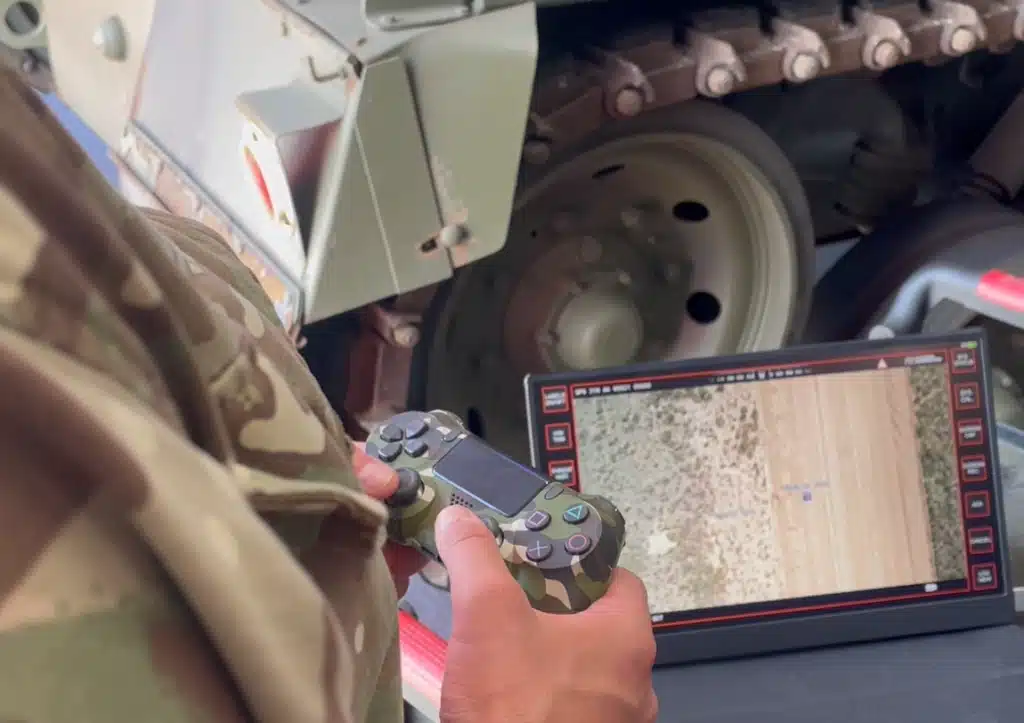
As to the landmine and IED threat, industry developed a variety of robust and highly flexible technologies to significantly reduce forces’ vulnerability against the increasing threat from sophisticated landmines, IEDs and other explosives. However, the process of Explosive Ordnance Disposal (EOD) is slow, expensive and dangerous. Well-experienced personnel, mission-oriented tactics and advanced equipment are needed to remove landmines and improvised explosives from often difficult terrain. The great challenge is to reduce the time it takes them to find, identify, eliminate or decommission.
In aggregate, previous requirements often did not match with rapidly emerging landmine and IED threats. Military planners must work within today’s realities. So, it makes sense to rethink the usefulness of adequate measures – manned/unmanned systems, dual sensors (Ground Based Radar/Electromagnetic Induction), communications, simulation & training – individually, depending on the threat level. Looking at previous military conflicts, various after-action reports declared current counter-mine/C-IED concepts obsolete, given the lack of protective measures, as well as unmanned technology.
The footprint of Pearson Engineering, headquartered in Newcastle upon Tyne, United Kingdom, is set to grow, as the demand of counter-mine/C-IED systems is increasing at a significant pace. The UK manufacturer traditionally provides the British and other international militaries with the latest technology for mine detection, identification and removal. In the field of C-IED, EOD and unexploded ordnance (UXO), representatives from Pearson Engineering told that there is a “steadily” growing demand for detectors and software products for analytics. Testing and development of new equipment will likely be leveraged into future projects. The company’s „Threat-Sense“ solution, an AI-powered, deep-learning system showcased at EUROSATORY 2026, is set to offer the military user with a new software product that detects and identifies surface-laid mines and explosive threats in real-time. In Paris Villepinte last June, Military Technology spoke with Tim Prichard, Business Development Manager at Pearson Engineering, about the essentials of the new solution.
MT: Protecting ground forces against surface-laid threats is a major issue. Pearson Engineering designed Threat-Sense that detects, identifies and alerts troops of the presence of surface-laid landmine threats. Can you please explain the principal design characteristics of Threat-Sense?
Tim Prichard: Threat-Sense software uses artificial intelligence to detect, identify and alert users to the presence of surface laid landmine threats. Offering at distance threat detection for armoured vehicles and force-wide situational awareness.
Fully passive, Threat-Sense analyses multiple video streams in real time from visible-spectrum cameras. Video streams can come from any high-resolution RGB camera. Whether that be on a UGV, UAV, or crewed vehicle. The detection algorithm is optimised for detection in varying real-world environments and temporal conditions.
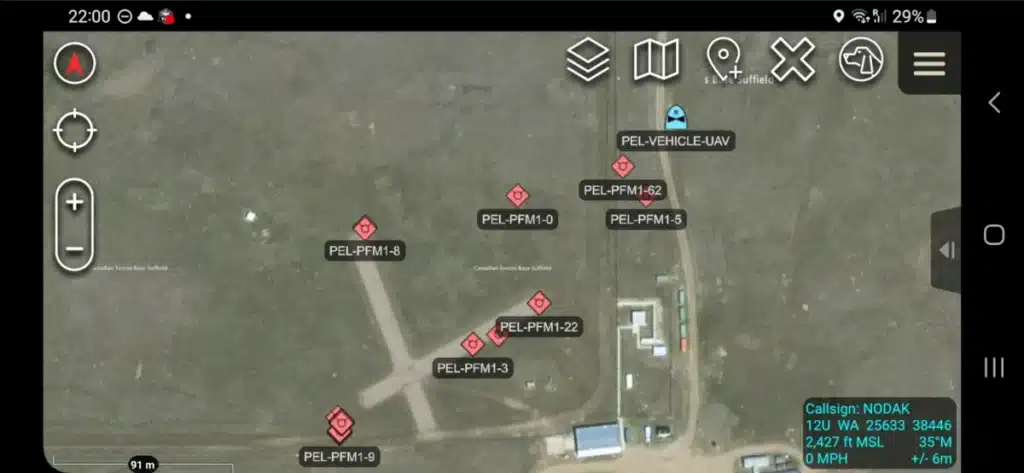
During Threat-Sense deployment, if any threats from a pre-programmed library are detected, the user is immediately alerted using visible and audible alerts. A GPS location, timestamp and unique ID are logged for each threat detected. Logged threat information can be shared rapidly using Android Team Awareness Kit (ATAK), or middleware options like DDS [Data Distribution Services] or custom APIs [Application Programming Interfaces]. Integration with Command and Control [C2] and Battle Management Systems [BMS] is also fully supported. Further extending the level of protection provided.
MT: Could you explain the specific uses of the solution and how it brings additional capability for military engineers?
Tim Prichard: Early in the Ukraine conflict, it became clear that force elements were being fixed by rapidly deployed munitions [from both surface and air]. These surface laid threats reduce freedom of movement and render forces vulnerable to enemy fires. For routine use, Threat-Sense provides a live feed of surface laid threats for operators of armoured vehicles, to navigate these threats and move to safety.
In more deliberate operations, Threat-Sense enables military engineers to clear main supply routes or map surface laid threats in minefields, in conjunction with the MineWolf 370 Next Generation, reducing reconnaissance time ahead of minefield breaching operations when forces are susceptible to drones and artillery. [Ed.: Pearson’s MineWolf 370 Next Generation is an advanced uncrewed mine and route clearance platform that delivers enhanced capability for the effective removal of anti-personnel (AP) and anti-tank (AT) landmines across large operational areas.]
Photos: Pearson Engineering
MT: Then the bigger question is: What is the demand for Threat-Sense under war conditions (e.g., in Ukraine) and how could the solution be deployed under post-war conditions as expected in the Ukraine?
Tim Prichard: As a visual detection software Threat-Sense can be used with any vehicle or drone camera systems; the only limitation is the camera system resolution. Situational awareness is key to contemporary operations, and Threat Sense provides a low-cost, scalable and intuitive approach to dealing with the challenges of surface laid threats. Furthermore, it can be used in military minefield breaching or humanitarian demining operations for large area clearance, where Threat Sense provides a layered approach to mechanical clearance.
Leveraging our artificial training environment and deep learning algorithm, Threat-Sense can rapidly train for new threat and add layers of capabilities. The applications extend well beyond surface laid detection and are not limited to conflict/post conflict operations.
TM: Threat-Sense is set to offer great potential for the variety of international users. Can you describe your marketing strategy?
Tim Prichard: We are focused on demonstrating and enhancing Threat-Sense’s capabilities with users across the globe including NATO trails in 2023 where Threat-Sense achieved over 80 percent accuracy in real time detection of surface laid threats. Alongside collaborations and trials with complementary partners like Skydio https://www.pearson-eng.com/news/nato-approved-skydio-drones-now-feature-pearson-engineerings-ai-tech-threat-sense-for-advanced-battlefield-mine-detection/
Stefan Nitschke
Editor-in-Chief